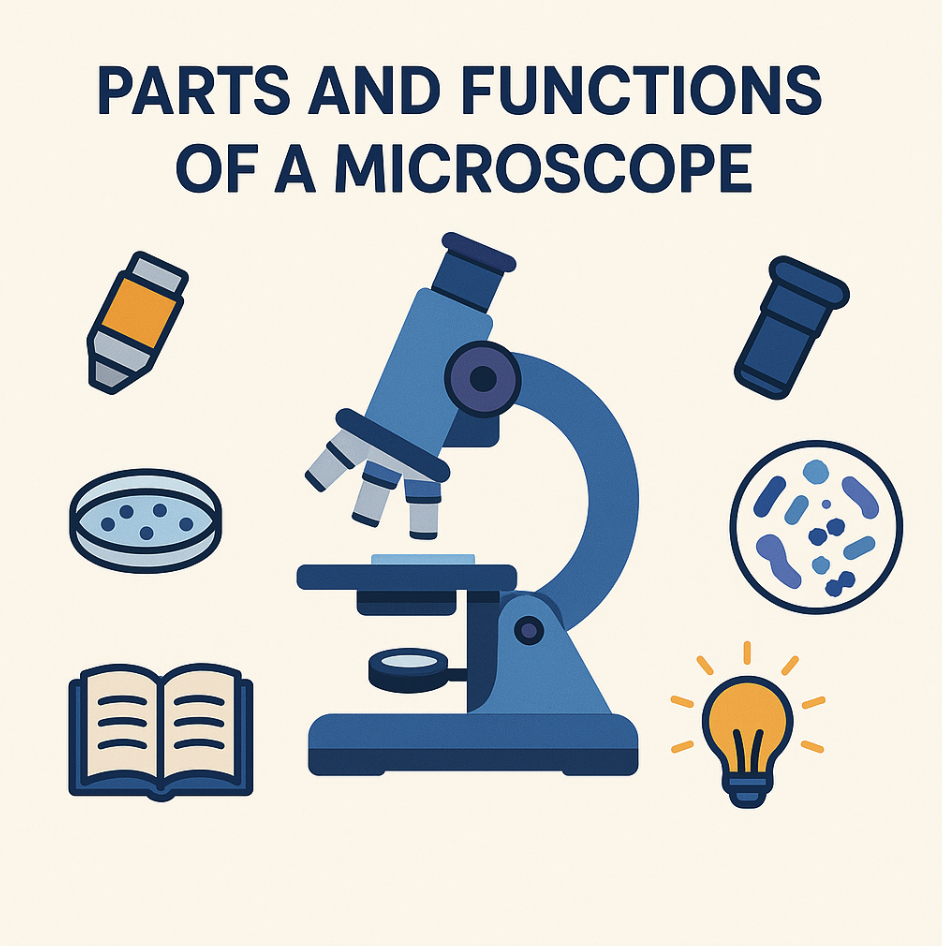

You hold the power to see the hidden world in sharp detail with the microscope fine focus knob. This small dial lets you bring blurry images into razor-sharp clarity, especially when you explore high magnification. When you adjust it carefully, you unlock layers within your specimen and protect your equipment.
Key Takeaways
-
The fine focus knob helps you make small, precise adjustments to sharpen the image, especially at high magnifications.
-
Always start with the coarse focus knob to locate the specimen, then use the fine focus knob for final clarity.
-
Turn the fine focus knob slowly and gently to avoid damaging slides or lenses and achieve the best results.
What Is the Microscope Fine Focus Knob?
Fine Focus Knob Definition
You can transform your view of the microscopic world with the microscope fine focus knob. This small but powerful dial sits on the side of most microscopes, ready to help you see every detail. When you turn it, you make tiny adjustments that bring your specimen into perfect clarity.
You do not need to worry about making big mistakes—this knob moves slowly and precisely, so you stay in control. The fine adjustment knob is usually smaller than the coarse adjustment knob. Its function is to make very small changes in focus. This knob is used when the image is already visible but not sharp enough. Instead of moving the stage a large distance, it moves slowly and precisely, allowing you to improve clarity.
You will notice the difference when you use high magnification. The microscope fine focus knob lets you sharpen the image, revealing details you might otherwise miss. You can feel confident knowing that this tool helps you achieve the best possible view.
When you use the microscope fine focus knob, you unlock the hidden beauty in every slide.
-
The fine focus knob enables precise adjustments, which are crucial for achieving a sharp image.
-
It is particularly important at higher magnifications where clarity is essential for detailed observations.
-
Using the fine focus knob helps in refining the focus after the coarse adjustments have been made.
The microscope fine focus knob is your key to success in microscopy. You can rely on it to make subtle corrections that bring your observations to life.
Fine Focus vs. Coarse Focus
You might wonder how the microscope fine focus knob differs from the coarse focus knob. Both knobs help you focus, but they work in unique ways. The coarse focus knob moves the stage quickly and covers large distances. You use it to find your specimen and get a rough view. The microscope fine focus knob, on the other hand, allows you to make tiny, precise changes.
This is what brings your image into sharp focus.
|
Knob Type |
|
|---|---|
|
Coarse Focus |
Adjusts large distances, rough view |
|
Fine Focus |
Allows small, precise adjustments |
You can see the difference in how each knob moves the stage:
|
Focus Type |
|
|---|---|
|
Coarse Focus |
Rapid & Large, moves centimeters at a time |
|
Fine Focus |
Slow & Microscopic, moves millimeters; movement is invisible to the naked eye |
When you use the microscope, you start with the coarse focus knob to bring the specimen into view. Then, you switch to the microscope fine focus knob for the final, sharp adjustment. This process is essential for clear, detailed observations, especially at high magnification.
-
The fine adjustment knob allows for precise focusing after initial adjustments with the coarse knob.
-
It moves the stage or optical system in very small increments for subtle corrections.
-
This is crucial for enhancing image sharpness and resolution, especially with high-power objectives.
You hold the power to reveal the smallest details. The microscope fine focus knob gives you the confidence to explore, discover, and succeed in your scientific journey.
Finding and Using the Fine Adjustment Knob
Locating the Fine Adjustment Knob
You stand at the microscope, ready to explore. You notice two main knobs on the side. The coarse adjustment knob is larger and easy to spot. It sits closest to the base and helps you move the stage quickly. Right beside it, you find the fine adjustment knob. This knob is smaller and often sits either just above or below the coarse adjustment knob.
Sometimes, both knobs are stacked together, and you can turn each one separately.
You reach for the fine adjustment knob when you want to make tiny changes. It feels smooth and precise under your fingers. You see that the fine adjustment knob moves the stage or lens only a little bit at a time. This careful movement helps you avoid damaging the slide or lens. You feel confident because you know exactly where to find the fine adjustment knob every time you use the microscope.
Tip: If you ever feel unsure, look for the smaller knob next to the coarse adjustment knob. The fine adjustment knob always gives you control for sharp focusing.
How to Use Fine Focus
You begin your journey by placing your slide on the stage. You start with the coarse adjustment knob. This knob helps you find your specimen quickly. You move the stage up or down until you see the specimen come into view. You use low power first, so you avoid any risk to the slide or lens.
Once you see your specimen, you switch to the fine adjustment knob. You turn the fine adjustment knob slowly. You watch as the blurry image becomes clear.
You feel excitement as the details appear. You use the fine adjustment knob to make the image sharp, especially when you use higher magnification.
Here is a step-by-step guide to help you master the process:
-
Place your slide on the stage and secure it.
-
Select the lowest power objective lens.
-
Use the coarse adjustment knob to bring the stage up until the specimen comes into view.
-
Switch to a higher power objective lens if you want more detail.
-
Use the coarse adjustment knob again to adjust the stage, but only until you see the specimen.
-
Now, use the fine adjustment knob. Turn it gently to sharpen the image.
-
Continue adjusting the fine adjustment knob until you see the specimen in perfect clarity.
You follow this sequence every time you use the microscope. You protect your slides and lenses by starting with the coarse adjustment knob and finishing with the fine adjustment knob. You achieve sharp images and avoid mistakes.
-
The coarse adjustment knob helps you locate the specimen at low power.
-
The fine adjustment knob enhances sharpness at higher magnifications.
-
This sequence prevents damage and ensures a clear view.
You feel inspired as you see the hidden world come alive. You realize that the fine adjustment knob is your tool for success. You trust your hands and your eyes. You know that every time you use the fine adjustment knob, you unlock new discoveries.
Note: Always use the fine adjustment knob for final focusing. You will see the best results and protect your equipment.
|
Step |
Action |
|---|---|
|
1. Find specimen |
Use coarse adjustment knob |
|
2. Sharpen image |
Use fine adjustment knob |
|
3. Protect slide |
Follow the correct sequence |
You use the fine focus knob for the last adjustment. You see the sharpest image possible. You feel proud of your skills and ready for new adventures in microscopy.
Fine Focus Tips and Common Mistakes
Best Practices for Fine Focus
You can achieve amazing results with the fine focus knob when you follow a few simple habits. Start every session by cleaning your microscope with the right tools. Always use proper cleaning solutions and soft materials. Never use dry or rough items, and avoid touching the lenses with your fingers. Handle the objectives and eyepieces by their barrels to keep everything spotless.
When you use the fine focus knob, move it slowly and watch the image carefully.
Small turns make a big difference. You protect your slides and lenses by using gentle pressure. You also avoid damage by starting with low power and only switching to high power after you find your specimen. This method gives you the best chance for precise focusing and clear images.
Avoiding Fine Focus Errors
You can avoid common mistakes with a little practice and awareness. Many beginners start with the highest magnification, which makes it hard to find the specimen. Begin with low power and work your way up. Never use the coarse adjustment knob at high power, as this can damage your slide or lens. Turn the fine focus knob slowly—quick movements can cause you to miss the perfect focus point.
Always check that your specimen sits in the center of the viewing area before you adjust the fine focus knob.
-
Start with low magnification before using fine focus.
-
Use the fine focus knob gently and slowly.
-
Avoid using the coarse knob at high power.
-
Make sure your specimen is centered before focusing.
You hold the key to success with the fine focus knob. Practice these tips, and you will unlock sharp, beautiful images every time.
You can master the microscope fine focus knob with practice and patience. Remember these steps:
-
Start with the lowest objective to find your specimen.
-
Use the coarse focus knob at low power, then switch to the fine focus knob for sharp detail.
FAQ
How do you use the fine adjustment knob to improve focus?
You turn the fine adjustment knob slowly. You watch the image change. You see the specimen become clear. You achieve sharp focus and unlock hidden details.
Why does the fine adjustment knob matter for focus at high magnification?
You rely on the fine adjustment knob for precise focus. You see tiny features. You avoid blurry images. You gain confidence and discover new worlds with sharp focus.
What should you do if you cannot get perfect focus with the fine adjustment knob?
You check your slide position. You clean the lens. You adjust the fine adjustment knob gently. You try again. You celebrate when you achieve clear focus. Practice using the fine adjustment knob. You will master focus and see amazing results.
-
You use the fine adjustment knob for final focus.
-
You protect your slides and lenses.
-
You enjoy sharp images every time.