
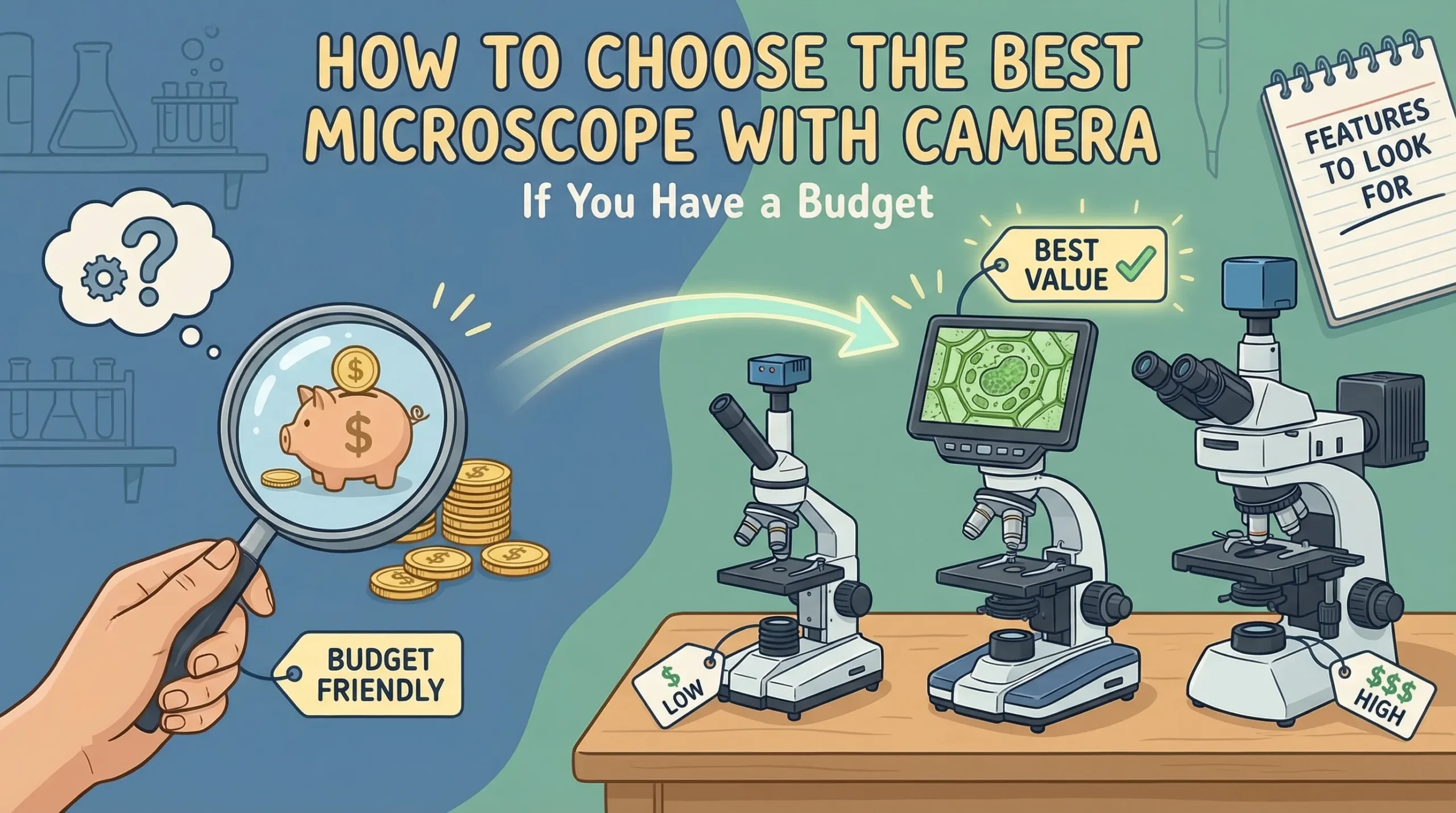
Choosing the best microscope with camera on a budget can feel overwhelming, especially with so many options available. You need to focus on key features that align with your specific needs. The best microscope with camera options have become more popular and flexible due to the development of affordable CCD video and digital cameras. These cameras offer high-resolution imaging, making them ideal for various applications, from education to research.
Understanding these features will help you make an informed decision without breaking the bank.
Determine Your Budget
Choosing a microscope with a camera can be an exciting journey, especially when you have a budget to consider. You might feel the pressure to find the perfect balance between cost and quality. However, understanding your financial boundaries can make this process smoother and more enjoyable.
Setting a Realistic Budget
Setting a realistic budget is the first step in your microscope selection process. You need to assess how much you are willing to spend. Consider what features are essential for your needs. For instance, if you are a student or hobbyist, you might not require the advanced features that a professional researcher would need.
Here’s a simple breakdown of what you might expect to spend based on different needs:
|
User Type |
Budget Range |
Features to Consider |
|---|---|---|
|
Students |
$100 – $300 |
Basic magnification, decent camera quality |
|
Hobbyists |
$300 – $600 |
Higher magnification, better resolution |
|
Professionals |
$600 – $1,500+ |
Advanced features, high-resolution camera |
Understanding these ranges can help you set a budget that aligns with your requirements. Remember, a higher price doesn’t always mean better quality for your specific needs.
Understanding Your Financial Limits
Understanding your financial limits involves more than just setting a budget. You need to consider the long-term value of your investment. Think about how often you will use the microscope and for what purposes.
If you plan to use it frequently, investing a bit more upfront might save you money in the long run by avoiding frequent replacements or upgrades.
Consider potential additional costs, such as accessories or software that might enhance your microscope’s functionality. These can add up, so factor them into your budget planning. By clearly defining your financial limits, you can avoid overspending and ensure that you choose a microscope that offers the best value for your money.
Key Features to Consider
When selecting the best microscope with camera, understanding the key features can significantly impact your decision. These features determine the quality and functionality of the microscope, ensuring it meets your specific needs.
Camera Quality
The camera quality in a microscope is crucial for capturing clear and detailed images. It directly affects how well you can document and analyze your observations.
Importance of Resolution
Resolution plays a vital role in camera quality. A higher resolution provides more detail, allowing you to see finer structures in your samples. For instance, a camera with a resolution of 1080p or higher is ideal for most educational and hobbyist applications. If you require more precision, consider a 4K camera, which offers exceptional clarity and detail.
Image Quality Considerations
Image quality goes beyond resolution. Factors such as color accuracy and noise levels are equally important. Modern CMOS sensors, like those found in the BRESSER MikroCam SP Microscope Camera, deliver brilliant colors with low noise, making them perfect for applications where true natural colors are essential. This ensures that the images you capture are not only clear but also true to life.
Magnification Power
Magnification power determines how much you can enlarge the image of your sample. It’s essential to choose a microscope with the right magnification range for your needs.
Range of Magnification Needed
Different applications require different magnification levels. For basic biological studies, a magnification range of 40x to 1000x is usually sufficient. However, if you’re involved in more detailed research, you might need a microscope that offers up to 2000x magnification. Understanding your specific requirements will help you select the appropriate magnification range.
Different Uses and Requirements
Consider what you intend to use the microscope for. A lower magnification might suffice for simple observations, while higher magnifications are necessary for detailed analysis. For example, a USB Microscope Camera can be ideal for tasks requiring high resolution and fast frame rates, such as fluorescence work or extended depth of focus.
Software Compatibility
Software compatibility is another critical feature to consider. The software should be user-friendly and compatible with your devices to ensure a seamless experience.
User-Friendly Software
User-friendly software makes it easier to capture and analyze images. Look for software that offers multiple adjustments for capturing still images and videos. The BRESSER MikroCamII Microscope Camera includes imaging software that allows for easy measurement in the live camera image, enhancing your ability to analyze samples effectively.
Device Compatibility
Ensure that the microscope’s software is compatible with your computer or device. Many modern microscopes, like those with USB connections, offer broad compatibility, allowing you to connect directly to your laptop or desktop. This feature is particularly useful for viewing live images and making measurements on captured images.
By focusing on these key features, you can choose the best microscope with camera that fits your budget and meets your specific needs. Understanding these aspects will guide you in making an informed decision, ensuring that your investment provides the best value.
Brand and Model Recommendations
Choosing the best microscope with camera can be daunting, especially with numerous brands and models available. You want a microscope that offers excellent value for money and meets your specific needs. Here are some recommended microscopes that provide a balance of quality, features, and affordability.
Recommended Microscopes
Good Value for Money
-
AmScope Microscopes: Known for their reliability and ease of use, AmScope offers a range of microscopes suitable for both beginners and professionals. Their fixed power stereo microscopes are particularly popular among students and hobbyists due to their simplicity and affordability. These models provide essential magnification options without unnecessary complexities, making them a great choice for those on a budget.
-
OptixCam Microscope Cameras: If you’re looking for a digital solution, OptixCam offers high-quality CMOS sensors that deliver excellent image capture and documentation. These cameras are ideal for educational and industrial applications, providing good performance at a reasonable price. With options under $1,000, OptixCam ensures you get a reliable microscope camera without overspending.
-
OMAX 40X-2000X Digital Camera Binocular Compound LED Microscope: This model is a favorite among users for its affordability and features. It offers a wide magnification range, making it suitable for various applications, from basic biological studies to more detailed research. The built-in digital camera allows for easy image capture and analysis, providing great value for money.
-
Celestron Microdirect 1080p HDMI Handheld Digital Microscope: For those who need portability and convenience, this handheld digital microscope is an excellent option. It provides high-definition imaging and is perfect for on-the-go observations. Its compact design and HDMI connectivity make it a versatile tool for both educational and professional use.
Features and Benefits
-
AmScope Microscopes:
-
Ease of Use: Fixed power models are straightforward, making them ideal for beginners.
-
Affordability: Offers essential features at a budget-friendly price.
-
Durability: Built to last, ensuring long-term use.
-
-
OptixCam Microscope Cameras:
-
High-Quality Imaging: CMOS sensors provide clear and detailed images.
-
Versatility: Suitable for various applications, including industrial and educational.
-
Cost-Effective: Offers excellent performance without breaking the bank.
-
-
OMAX Digital Microscope:
-
Wide Magnification Range: Suitable for different levels of study and research.
-
Digital Integration: Built-in camera for easy image capture and analysis.
-
User-Friendly: Simple setup and operation.
-
-
Celestron Microdirect Microscope:
-
Portability: Compact and easy to carry.
-
High-Definition Imaging: Provides clear and detailed observations.
-
Versatile Connectivity: HDMI output for direct connection to displays.
-
These recommendations aim to guide you in selecting a microscope that aligns with your budget and requirements. By focusing on value and essential features, you can make an informed decision that enhances your microscopy experience.
Where to Buy
Finding the right place to purchase your microscope with a camera is crucial. You want to ensure you get a quality product that meets your needs and budget. Here are some reliable options to consider:
Reliable Retailers
-
New York Microscope Company: This retailer offers a wide range of microscope cameras, including video, digital, and digital eyepiece cameras. They stock products from reputable brands like OPTIKA, LW Scientific, and LABOMED. Their selection ensures you find a camera that suits your specific application.
-
Microscope Central: Known for its extensive experience in the industry, Microscope Central provides a variety of microscopes and cameras. They offer products from well-known brands, ensuring quality and reliability. Their customer service can help guide you in selecting the right microscope for your needs.
-
Pepler Optics: Specializing in digital microscopes and cameras, Pepler Optics offers a comprehensive selection. Their website provides detailed information on each product, helping you make an informed decision. They focus on quality and customer satisfaction, making them a trustworthy choice.
-
Olympus IMS: Olympus offers digital microscope cameras designed for high-quality imaging. Their cameras provide seamless compatibility with microscopes and image analysis software, ensuring a smooth user experience. Olympus is a reputable brand known for its innovation and quality.
Online Platforms
-
Amazon: As a leading online marketplace, Amazon offers a vast selection of microscopes with cameras. You can find products from various brands, read customer reviews, and compare prices. Amazon’s return policy and customer service provide added peace of mind.
-
eBay: eBay is another platform where you can find both new and used microscopes with cameras. It allows you to bid on items or buy them outright. Be sure to check the seller’s ratings and reviews to ensure a positive buying experience.
-
Best Buy: Known for electronics, Best Buy also offers a selection of microscopes with cameras. They provide detailed product descriptions and customer reviews, helping you make an informed choice. Best Buy often has promotions and discounts, making it a cost-effective option.
-
B&H Photo Video: This retailer specializes in photography and video equipment, including microscope cameras. B&H offers a range of products from top brands, ensuring quality and reliability. Their knowledgeable staff can assist you in finding the right microscope for your needs.
When purchasing a microscope with a camera, consider these reliable retailers and online platforms. They offer a variety of options to suit different budgets and requirements, ensuring you find the best product for your needs.
Common Mistake to Avoid
When considering a microscope with a camera, you might feel overwhelmed by the technical details and options available. It’s easy to make mistakes that could affect your experience and investment. Here are some common pitfalls to watch out for:
Overlooking Software Compatibility
You might focus on the hardware features of a microscope, but software compatibility is equally crucial. The software that accompanies your microscope should work seamlessly with your operating system. If it doesn’t, you could face difficulties in capturing and analyzing images.
-
Check Compatibility: Ensure the software supports your computer’s operating system. Whether you use Windows, macOS, or Linux, verify that the microscope’s software will function properly. This step prevents potential frustrations and ensures a smooth user experience.
-
User Reviews: Read reviews from other users to learn about their experiences with the software. They can provide insights into any compatibility issues or ease of use. User feedback often highlights practical aspects that manufacturers might not mention.
-
Seek Recommendations: Consult colleagues or experts in your field for software recommendations. They can suggest reliable options that integrate well with microscopes, enhancing your ability to capture and analyze images effectively.
-
Software Updates: Check if the manufacturer provides regular software updates. Updates can improve functionality and fix bugs, ensuring your microscope remains compatible with new operating system versions.
Ignoring Long-Term Needs
When purchasing a microscope, you might focus on immediate requirements, overlooking long-term needs. This oversight can lead to additional costs and inconvenience down the line.
-
Future Applications: Consider how your microscopy needs might evolve. If you anticipate expanding your research or educational activities, choose a microscope that can accommodate future applications. This foresight can save you from needing to upgrade or replace your equipment prematurely.
-
Accessory Compatibility: Ensure the microscope supports various accessories, such as additional lenses or cameras. This flexibility allows you to enhance your setup as your needs change, providing a cost-effective way to adapt to new challenges.
-
Durability and Warranty: Evaluate the durability of the microscope and the warranty offered by the manufacturer. A robust warranty can provide peace of mind, covering repairs or replacements if issues arise. Durable equipment ensures long-term reliability, reducing the likelihood of frequent replacements.
-
Budget Planning: Establish a budget that accounts for potential future expenses, such as accessories or software upgrades. Planning for these costs helps you manage your finances effectively and ensures you can maintain and enhance your microscope over time.
Avoiding these common mistakes can enhance your experience with a microscope and ensure you make a wise investment. By focusing on software compatibility and long-term needs, you can select a microscope that meets your current requirements and adapts to future demands.
What Else to Know
When you invest in a microscope with a camera, you want it to last and perform optimally. Understanding maintenance and potential upgrades can enhance your experience and extend the life of your equipment.
Maintenance Tips
Proper maintenance ensures your microscope remains in excellent condition. Regular care can prevent issues and prolong the lifespan of your device.
-
Regular Cleaning: Clean the lenses and optical components frequently. Use a soft, lint-free cloth and lens cleaner to remove dust and smudges. Avoid using harsh chemicals that might damage the optics.
-
Storage: Store your microscope in a dust-free environment. A protective cover can shield it from dust and debris when not in use. Ensure the storage area is dry to prevent moisture-related damage.
-
Routine Inspections: Conduct regular inspections to check for loose parts or wear and tear. Tighten any loose screws and replace worn-out components promptly. This practice helps maintain the microscope’s stability and performance.
-
Professional Servicing: Schedule periodic servicing by a qualified technician. A little TLC from a professional can address minor issues before they become significant problems. This service might include calibrating the microscope or replacing worn parts.
Future Upgrades
Upgrading your microscope can enhance its capabilities and keep it up-to-date with technological advancements. Consider these potential upgrades:
-
Camera Upgrades: If your current camera lacks the resolution or features you need, consider upgrading to a higher-quality model. Newer cameras often offer better image quality and additional functionalities, such as improved software compatibility.
-
Lens Enhancements: Upgrading to new lenses can improve image clarity and magnification. High-quality lenses provide sharper images and better light transmission, enhancing your observations.
-
Subsystem Improvements: Consider upgrading subsystems like fluorescence filters or stages. These enhancements can expand your microscope’s capabilities, allowing you to explore new applications and techniques.
-
Software Updates: Keep your software up-to-date to ensure compatibility with new operating systems and devices. Updated software often includes new features and improvements that enhance your microscopy experience.
|
Upgrade Type |
Benefits |
Considerations |
|---|---|---|
|
Camera Upgrades |
Improved resolution, better features |
Compatibility with existing setup |
|
Lens Enhancements |
Sharper images, better magnification |
Cost and installation |
|
Subsystem Improvements |
Expanded capabilities, new techniques |
Specific needs and applications |
|
Software Updates |
New features, improved compatibility |
Regular updates and support availability |
Understanding these maintenance tips and upgrade options can help you get the most out of your microscope. By taking proactive steps, you ensure your equipment remains reliable and effective for years to come.
Choosing the best microscope with camera involves balancing your needs with your budget. This decision requires careful consideration of features, types, and brands. You must prioritize what matters most to you, whether it’s camera quality, magnification power, or software compatibility.
Remember, a higher price doesn’t always guarantee better quality. Understanding your specific needs and budget will help you make a smart choice that provides the best value.
Seize this chance to delve into the microscopic realm, confident in your wise investment.