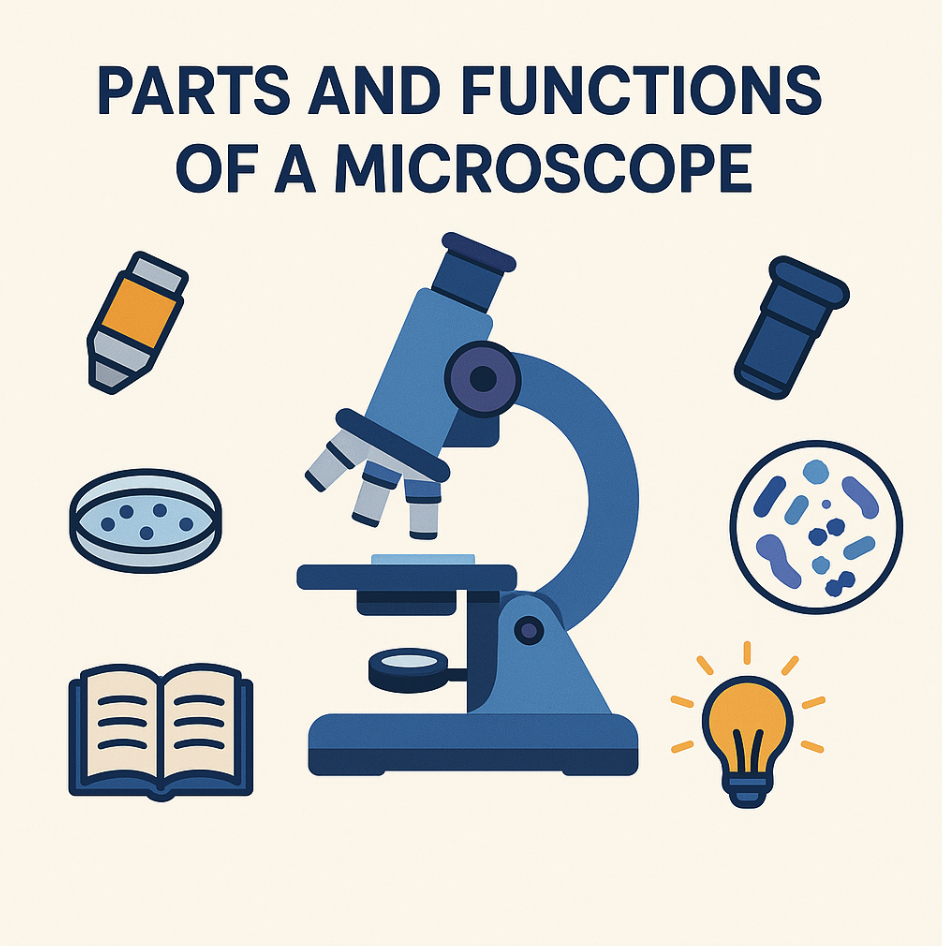
You need to know what power microscope to see bacteria. At a minimum, 400x lets you see bacteria shapes. For crisp detail, 1000x with oil immersion brings those tiny cells into focus. With a quality microscope, you can observe common bacteria such as:
-
Escherichia coli (E. coli)
-
Bacillus subtilis
-
Staphylococcus aureus
-
Streptococcus pneumoniae
-
Salmonella enterica
-
Mycobacterium tuberculosis
-
Vibrio cholerae
-
Lactobacillus acidophilus
You can experience the hidden world of microbes right from your home or classroom.
What Power Microscope to See Bacteria
Minimum Magnification Needed
When you want to know what power microscope to see bacteria, you should start with the basics. Most common bacteria measure between 0.2 and 8 micrometers. To see bacteria, you need at least 100x total magnification. However, for most home and classroom users, compound microscopes with 400x total magnification make it possible to spot bacteria as tiny dots or rods. At this level, you can recognize the general shape, but you will not see much detail.
Why 1000x Is Better for Bacteria
If you want to explore the structure of bacteria, you need to increase the total magnification. At 400x, bacteria appear as faint specks, and their internal features remain hidden. When you use 1000x total magnification, you unlock a new level of detail. You can observe internal structures and subtle differences between species.
This clarity comes from both the higher power and the use of oil immersion.
Oil immersion is a technique that involves placing a drop of special oil between the slide and the objective lens. This method reduces light refraction, which means more light enters the lens and the image becomes sharper. The oil has a similar refractive index to glass, so it helps you see the fine details inside bacterial cells.
Compound microscopes with oil immersion objectives are the best tools for this purpose.
|
Magnification |
What You See with Compound Microscopes |
|---|---|
|
400x |
Bacteria as dots or rods, little detail |
|
1000x (oil) |
Internal structures, clear cell shapes |
When you consider what power microscope to see bacteria, always look for compound microscopes that offer 1000x total magnification with oil immersion. This combination gives you the best chance to study bacteria in detail and makes your observations much more rewarding.
1. AmScope B120C-E1 Microscope
Specs for Bacteria Viewing
You want a microscope that gives you crisp, detailed images when you see bacteria. The AmScope B120C-E1 stands out as a bacterial cell microscope because of its impressive technical specifications. Here is a quick overview:
|
Specification |
Details |
|---|---|
|
Magnification Range |
40X to 2500X with color-coded objectives and widefield eyepieces |
|
Illumination |
Bright, daylight-balanced LED with fly-eye lens for improved contrast |
|
Objective Turret |
Four objectives for instant switching between magnification levels |
|
Darkfield Observation |
Enhances contrast for live cells and hard-to-see objects |
|
Mechanical Stage |
Two-layer stage for smooth, precise movement of slides |
|
LED Sub-stage Lighting |
Even, energy-efficient lighting for natural color imaging |
You can easily switch between objectives to find the best view for your sample. The LED illumination system provides clear, bright images, which helps you spot even the smallest bacteria.
Pros and Cons
Pros:
-
Wide magnification range lets you observe everything from basic cell shapes to fine bacterial details.
-
Four objectives make it easy to adjust focus and zoom in on specific features.
-
Darkfield condenser improves contrast, especially for live or transparent specimens.
-
Mechanical stage allows precise control, so you can scan slides smoothly.
-
LED lighting stays cool and gives you consistent, natural colors.
Cons:
-
The microscope requires careful handling when using oil immersion objectives.
-
Some users may find the initial setup a bit complex if you are new to microscopy.
Why for Bacteria
You need a microscope that delivers both power and clarity when you study bacteria. The AmScope B120C-E1 gives you a magnification range from 40X to 2500X, which covers all the levels you need to see bacteria and their internal structures. The four objectives let you switch quickly between scanning and detailed observation. The darkfield condenser and advanced LED lighting help you see even faint or transparent bacteria.
If you want a reliable bacterial cell microscope for home, school, or lab, this model gives you the features and flexibility you need.
2. OMAX M82ES Microscope
Specs for Bacteria Viewing
You want a microscope that delivers clear images and reliable performance. The OMAX M82ES microscope offers several features that make it ideal for observing bacteria:
-
Magnification range from 40X to 2000X lets you see both basic shapes and intricate details.
-
Abbe condenser improves light focus, which helps you view bacteria with greater clarity.
-
Mechanical stage allows you to move slides smoothly and mark observation points.
-
Built-in 1.3MP camera enables you to capture images for later study or sharing.
-
LED light source provides bright, even illumination for all specimens.
These features ensure you can observe bacteria and other microorganisms with precision.
Pros and Cons
|
Pros |
Cons |
|---|---|
|
High magnification capabilities (up to 2000X) |
Reported quality control issues |
|
Good optics for observing microorganisms |
Need for adjustments for optimal operation |
|
Mostly metal construction with few plastic parts |
Some users reported support issues with the company |
|
Stage has an X and Y scale for easy observation point marking |
Objectives may not be set for optimal operation |
|
Main objectives can be upgraded or replaced |
Manual only available online as a PDF |
|
User-friendly features, arrives fully assembled |
|
|
Adjustable vertical condenser, can replace with a darkfield condenser |
|
|
5-year warranty against manufacturing defects |
|
Why for Bacteria
You need a microscope that helps you see the fine details of bacteria. The OMAX M82ES microscope gives you the magnification and clarity required for studying cell walls and membranes. Medical professionals use this microscope for examining biological samples, which shows its reliability. The Abbe condenser and mechanical stage make it easy to focus and move slides for detailed observation.
The LED light source ensures you get a clear view every time. You can also use the built-in camera to document your findings. The optics work well for viewing bacteria, fungi, and protozoa, making this microscope a versatile tool for any lab or classroom.
3. Swift SW380B Microscope
Specs for Bacteria Viewing
You want a microscope that delivers both clarity and versatility. The Swift SW380B stands out with its impressive technical specifications. You can see the details in the table below:
|
Specification |
Details |
|---|---|
|
Eyepiece |
10X/25X |
|
Objective lens |
4X/10X/40X/100X |
|
Magnification range |
40X/100X/250X/400X/1000X/2500X |
|
Illumination |
LED light source |
|
Stage |
Two-layer mechanical stage |
|
Application |
School, university, lab, hospital, medicine, research, dentistry, etc. |
The wide magnification range lets you observe everything from basic cell shapes to the fine details inside bacteria. The LED illumination provides bright, even lighting, which helps you see clear images at every magnification level.
Pros and Cons
Pros:
-
Offers magnification up to 2500X, which is ideal for viewing small bacteria.
-
Mechanical stage allows precise slide movement, making it easier to locate and track bacteria.
-
Abbe condenser ensures crisp images, especially at higher magnifications.
-
LED light source stays cool and provides consistent brightness.
-
Suitable for a wide range of applications, from classrooms to research labs.
Cons:
-
The microscope may feel heavy if you need to move it often.
-
Some users report a learning curve when adjusting the condenser for optimal clarity.
-
The price may be higher than basic student models.
Why for Bacteria
You need a microscope that makes it easy to see bacteria in detail. The Swift SW380B gives you the power and precision required for serious observation. The high magnification, combined with the Abbe condenser and mechanical stage, lets you focus on even the smallest bacteria. You can use this microscope in schools, labs, or medical settings.
If you want reliable performance and sharp images, this model is an excellent choice for studying bacteria.
4. Celestron Labs CM2000C Microscope
Specs for Bacteria Viewing
You want a microscope that delivers reliable performance and clear images. The Celestron Labs CM2000C microscope offers a magnification range from 40X to 2000X. You can use the four objective lenses to switch between scanning and detailed observation. The binocular head provides comfortable viewing, especially during long sessions. LED illumination gives you bright, even lighting.
The Abbe condenser improves contrast and sharpness, which helps you see bacteria more clearly. The mechanical stage allows you to move slides smoothly and precisely.
|
Specification |
Details |
|---|---|
|
Magnification Range |
40X, 100X, 400X, 1000X, 2000X |
|
Objective Lenses |
4X, 10X, 40X, 100X (oil immersion) |
|
Eyepiece |
Binocular, 10X |
|
Illumination |
LED |
|
Stage |
Mechanical, double-layer |
|
Condenser |
Abbe, adjustable |
Pros and Cons
Pros:
-
Wide magnification range lets you view bacteria at different levels of detail.
-
Binocular head reduces eye strain and improves comfort.
-
LED illumination stays cool and provides consistent brightness.
-
Mechanical stage makes slide movement easy and accurate.
-
Oil immersion objective enhances resolution for small bacteria.
Cons:
-
You may need to adjust the condenser for optimal clarity.
-
The microscope feels heavy if you move it often.
-
Some users report that the instructions lack detail.
Why for Bacteria
You need a microscope that helps you study bacteria with precision. The Celestron Labs CM2000C microscope gives you the magnification and clarity required for detailed observation. The oil immersion objective lets you see fine structures inside bacteria. The mechanical stage and Abbe condenser make it easy to focus and scan slides.
You can use this microscope in classrooms, labs, or at home. If you want a dependable tool for exploring bacteria, this model offers the features you need.
5. National Optical 131-CLED Microscope
Specs for Bacteria Viewing
You want a reliable microscope for observing bacteria in detail. The National Optical 131-CLED microscope offers features that support both classroom and laboratory use. You can see the main specifications in the table below:
|
Specification |
Details |
|---|---|
|
Magnification Range |
40X, 100X, 400X, 1000X |
|
Objective Lenses |
4X, 10X, 40X, 100X (oil immersion) |
|
Eyepiece |
Widefield 10X |
|
Illumination |
LED, cool and energy-efficient |
|
Stage |
Mechanical, coaxial controls |
|
Condenser |
Abbe, with iris diaphragm |
This microscope uses a sturdy metal frame. The LED illumination system provides bright, white light that helps you see bacteria clearly. The mechanical stage allows you to move slides smoothly for precise focusing.
Pros and Cons
Pros:
-
Delivers sharp images at all magnification levels.
-
Oil immersion objective lets you view bacteria with high resolution.
-
LED lighting stays cool and lasts a long time.
-
Mechanical stage makes slide navigation easy and accurate.
-
Simple controls make this microscope user-friendly for students.
Cons:
-
The microscope does not include a camera for capturing images.
-
You may need to adjust the condenser for best results.
-
The price is higher than some basic student models.
Why for Bacteria
You need a microscope that combines durability, clarity, and ease of use. The National Optical 131-CLED microscope gives you the power to observe bacteria at 1000X with oil immersion. The Abbe condenser and LED illumination work together to reveal fine details inside bacterial cells. You can use this microscope in classrooms, teaching labs, or at home.
If you want consistent performance and clear images, this model stands out as a strong choice for anyone interested in microbiology.
How to Choose a Microscope for Bacteria
Budget and Features
When you select a microscope, you should match its features to your budget and your needs. Entry-level models often provide up to 400x magnification, which works for basic observation. For detailed studies, you need a microscope that reaches 1000x or more. The quality of the lenses and the type of condenser also matter.
High-quality objectives and an Abbe condenser help you see fine details in bacteria. The table below shows how important each feature is at different price points:
|
Feature |
Lower Price Points |
Higher Price Points |
|---|---|---|
|
Magnification |
Up to 400x for basic analysis |
1000x+ for detailed studies |
|
Lens Quality |
Standard objectives |
High-quality objectives |
|
Camera |
Basic 2 MP camera |
High-resolution camera |
|
Microscope Head |
Monocular or binocular |
Trinocular |
|
Abbe Condenser |
Not essential |
Crucial for 400x and above |
|
Mechanical Stage |
Optional |
Essential for precise adjustments |
Ease of Use
You want a microscope that is easy to set up and operate. Features like fixed Köhler illumination and simple controls help you start viewing quickly. A mechanical stage lets you move slides smoothly, and digital connectivity allows you to capture and share images.
The table below highlights features that improve ease of use:
|
Feature |
Description |
|---|---|
|
Fixed Köhler illumination |
Provides optimal lighting without extra setup |
|
Simple operation |
Lets you plug in, turn on, and start viewing right away |
|
Good optics |
Ensures clear images for observing fine details |
|
Digital connectivity |
Makes it easy to view and share images on a screen |
Digital microscopes can also make viewing easier, especially if you prefer looking at a screen instead of through eyepieces.
Intended Use
Think about how you plan to use your microscope. If you need it for education, choose a model that supports hands-on learning and practical skills. Hobbyists often look for affordable, user-friendly microscopes. For research or advanced study, select a microscope with high magnification and precise controls.
Both students and professionals benefit from microscopes that reveal microorganisms clearly.
Tips to View Microbes and Bacteria
Slide Preparation
Proper slide preparation ensures you get the best results when you use your microscope to view microbes. Follow these steps for clear observation of bacteria and other microorganisms:
-
Clean your slides and cover slips thoroughly with soap and water or an alcohol-based cleaner. Remove any dirt, grease, or fingerprints.
-
Dry the slides and cover slips using a lint-free cloth or allow them to air dry.
-
Place a small drop of mounting medium or culture medium in the center of the slide.
-
Carefully position the specimen onto the mounting medium, avoiding air bubbles.
-
Add another drop of mounting medium onto the specimen, being careful not to overflow.
-
Gently lower the coverslip onto the mounting medium, again avoiding air bubbles.
-
Press lightly on the coverslip to remove any remaining bubbles.
-
Label your slide with the specimen name, date, and other relevant information.
Using Oil Immersion
Oil immersion increases resolution and clarity when you observe small microbes under a microscope. Use these steps for best results:
-
Center and sharpen the specimen using the 40x objective.
-
Rotate the objective ring to position the 100x oil immersion lens over the sample without lowering the stage.
-
Place a drop of immersion oil directly on the sample.
-
Use only the fine focus knob to adjust the image until it is sharp.
Getting a Clear View
You want the clearest possible view of bacteria and small microbes. Try these techniques:
-
Use a compound brightfield microscope with 400x to 1000x magnification.
-
Prepare samples with less liquid to prevent microorganisms from floating out of view.
-
Ensure the coverslip sits flat on the slide.
-
Close the condenser iris to enhance contrast and depth of field.
-
Keep bacteria density low to avoid clumping.
-
Apply stains like methylene blue, crystal violet, or safranin to improve visibility.
You need at least 400x power to see bacteria, but 1000x with oil immersion gives you the best detail. Experts recommend choosing a microscope based on your needs, budget, and ease of use. Each microscope in this list offers strong features for observing bacteria.
-
Consider magnification, lighting, and camera options.
-
Think about how you want to use your microscope and what matters most to you.
FAQ
What is the minimum magnification needed to see bacteria?
You need at least 400x magnification to view bacteria. This level allows you to see basic shapes and arrangements. For more detail, use higher magnification.
Why do I need oil immersion for viewing bacteria?
Oil immersion improves resolution at 1000x magnification. The oil reduces light scattering, so you see sharper images and finer details inside bacterial cells.
Can I use a microscope to view other microorganisms?
You can observe fungi, protozoa, and algae with the same microscope. Adjust magnification and lighting for each type. Staining techniques help highlight different structures.
What is the best microscope for mushroom spores?
You can use a compound microscope with 400x magnification for mushroom spores. Spores are larger than bacteria, so you do not need oil immersion.
How do I clean the oil immersion objective?
Use lens paper and a small amount of lens cleaner. Gently wipe the objective after each use. Avoid using rough materials that can scratch the lens.