
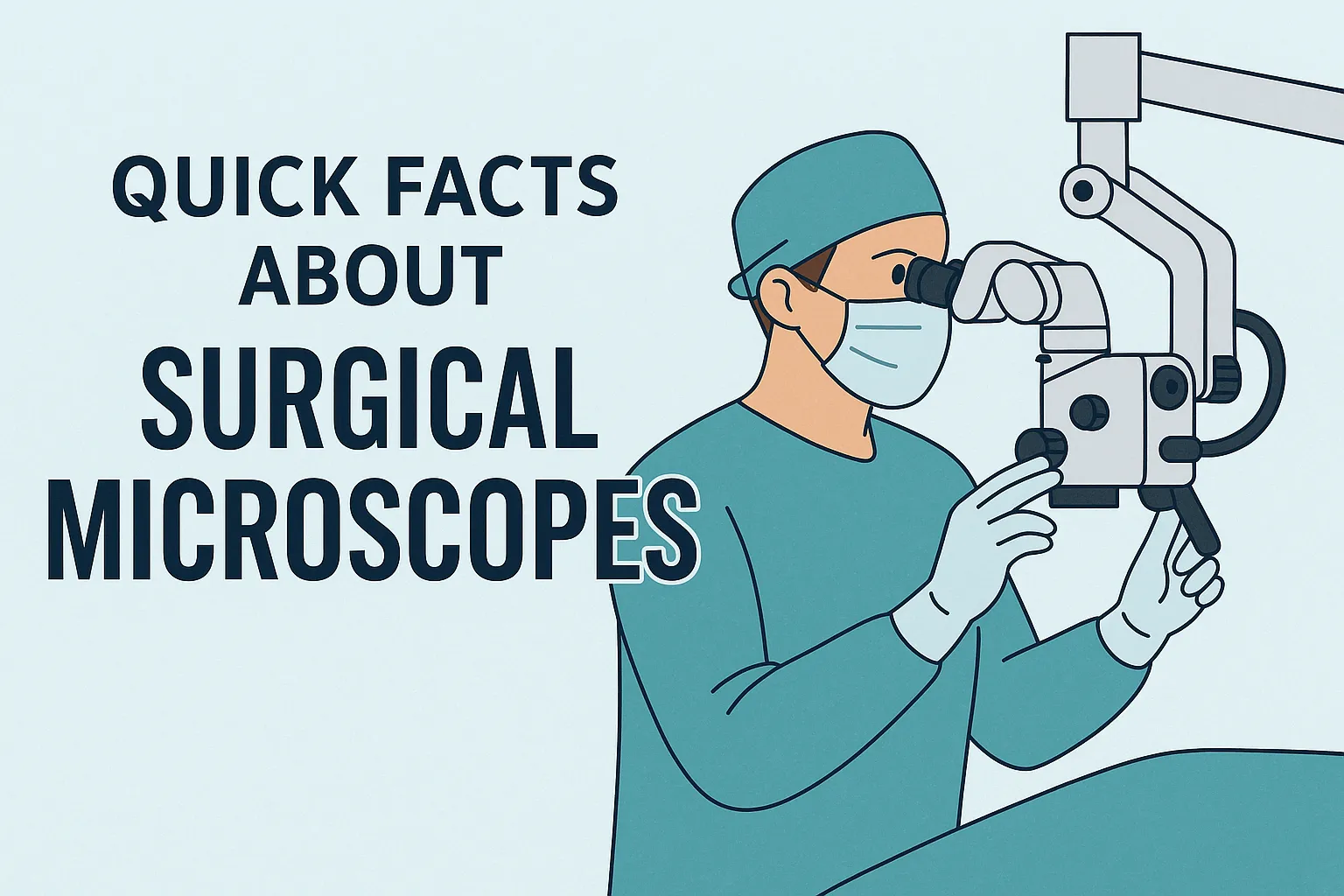
Surgical microscopes have revolutionized the field of surgery, bringing a new level of sophistication and accuracy to the operating room. With their advanced magnification capabilities, surgeons can now tackle complex procedures with ease, navigating even the most delicate anatomical structures with confidence. The impact is profound: patients benefit from faster recoveries, fewer complications, and improved overall outcomes.
As surgeons continue to harness the power of these cutting-edge tools, the possibilities for innovative and life-changing treatments are endless, opening up new avenues for medical breakthroughs and redefining the future of healthcare.
1. Precision and Magnification
Imagine you’re a surgeon performing a delicate procedure. Every detail matters, and precision is paramount. This is where the microscope for surgery becomes indispensable. It transforms your view, allowing you to see what the naked eye cannot.
Enhanced Visualization
Importance of magnification in delicate procedures
The operating microscope offers magnification levels ranging from 4x to 40x. This range is crucial for delicate surgeries where precision is key. For instance, in neurovascular procedures, the ability to magnify small anatomical structures ensures that you can perform with greater accuracy. This precision reduces the risk of complications and enhances patient outcomes.
Impact on surgical accuracy and outcomes
Enhanced visualization directly impacts surgical accuracy. With a microscope for surgery, you gain a clearer view of the surgical field. This clarity allows you to make precise incisions and avoid damaging surrounding tissues. Studies show that surgeries using these microscopes report a significant increase in successful outcomes. The precision they provide leads to fewer postoperative complications and faster recovery times for patients.
Optical Quality
High-resolution lenses and their benefits
The quality of the lenses in an operating microscope is paramount. High-resolution lenses offer clear visualization of fine details with excellent resolution and contrast. This clarity is essential for procedures like cataract surgery, where every detail counts. The integration of advanced imaging technologies, such as Augmented Reality and Fluorescence, further enhances the surgical view, providing you with a comprehensive understanding of the surgical field.
Adjustability for different surgical needs
Every surgery is unique, and the surgical microscope adapts to meet these varying needs. Its components are adjustable, allowing you to tailor the microscope to your specific requirements. Whether you’re performing a lengthy neurosurgery or a quick ophthalmic procedure, the microscope’s adjustability ensures that you maintain optimal posture and focus.
Such flexibility not only enhances your comfort but also improves the efficiency and effectiveness of the surgery.
2. Ergonomic Benefits
Imagine standing for hours in the operating room, your body strained and your focus waning. This scenario is common for many surgeons, but the operating microscope offers a solution. It not only enhances your surgical precision but also significantly improves your comfort and health.
Design Features
Adjustable components to fit surgeon’s posture
The design of the microscope for surgery prioritizes your comfort. Its adjustable components allow you to tailor the setup to your posture, reducing the physical strain that often accompanies long surgeries. You can adjust the height, angle, and position of the microscope to suit your needs, ensuring that you maintain a comfortable stance throughout the procedure. This adaptability is crucial in preventing fatigue and maintaining your focus.
Reduction of physical strain during long surgeries
Long surgeries can take a toll on your body, leading to discomfort and even injury. The operating microscope addresses this issue by minimizing the physical strain you experience. Its ergonomic design supports your natural posture, reducing the risk of musculoskeletal disorders. Studies have shown that ergonomic tools in surgery, like the 3D surgical system, enhance comfort and coordination among the surgical team.
This improvement in ergonomics not only benefits your health but also contributes to better surgical outcomes.
Impact on Surgeon Health
Prevention of musculoskeletal disorders
Musculoskeletal disorders are a common concern for surgeons, often resulting from prolonged periods of awkward positioning. The microscope for surgery plays a vital role in preventing these disorders. By allowing you to maintain a natural posture, it reduces the stress on your muscles and joints.
Research highlights the effectiveness of ergonomic tools in reducing musculoskeletal discomfort, emphasizing the importance of such innovations in surgical practice.
Increased focus and efficiency
When you’re comfortable, your focus and efficiency naturally improve. The ergonomic benefits of the operating microscope enable you to concentrate fully on the task at hand. With reduced physical strain, you can perform surgeries with greater precision and speed. This increased efficiency not only enhances patient outcomes but also contributes to a more satisfying surgical experience for you.
3. Technological Advancements
Imagine stepping into an operating room where technology transforms the way you perform surgeries. The integration of advanced technologies in surgical microscopes has revolutionized the field, offering you unparalleled precision and control. In this section, we will explore how these technological advancements enhance your surgical experience.
3D Visualization
The advent of 3D visualization in surgical microscopes marks a significant leap forward. This technology provides you with a superior operative view, allowing you to see the surgical field in three dimensions.
Benefits of three-dimensional imaging in surgery
3D visualization offers several benefits that enhance your surgical capabilities. It provides a high-resolution view, enabling you to see fine details with remarkable clarity. This is particularly beneficial in microsurgery, where precision is paramount. The enhanced depth perception allows you to navigate complex anatomical structures with ease, reducing the risk of errors.
What’s more, the improved light sensitivity and decreased aperture ensure that you have a clear view even in challenging lighting conditions.
Enhanced depth perception for complex procedures
Depth perception is crucial in surgeries that require intricate maneuvers, such as precision cancer surgery. With 3D visualization, you gain a better understanding of the spatial relationships within the surgical field. This enhanced perception allows you to perform complex procedures with greater accuracy, improving patient outcomes. The technology also serves as an educational tool, providing valuable insights for training and collaboration among the surgical team.
Digital Integration
The integration of digital technology into surgical microscopes has marked a significant turning point in the world of surgery. By seamlessly merging with digital platforms, these advanced microscopes are redefining the surgical experience, enabling surgeons to work with unprecedented ease and efficiency. With the ability to capture, record, and share high-quality images and videos, surgeons can now collaborate more effectively, document procedures with precision, and enhance patient care through data-driven insights.
Connectivity with other surgical tools and systems
Digital integration allows your operating microscope to connect seamlessly with other surgical tools and systems. This connectivity enables you to access real-time data and images, facilitating informed decision-making during surgery. The ability to share information instantly with your team enhances coordination and ensures that everyone is on the same page.
Real-time data and image sharing capabilities
The capability to share data and images in real-time is a game-changer in cancer surgery. It allows you to collaborate with specialists remotely, ensuring that you have access to expert opinions when needed. This feature also supports documentation and analysis, providing you with valuable insights for post-operative evaluation and research.
|
Feature |
Traditional Systems |
3D Visualization Systems |
|---|---|---|
|
Operative View |
Standard |
Superior |
|
Depth Perception |
Limited |
Enhanced |
|
Light Sensitivity |
Standard |
Improved |
|
Educational Tool |
Limited |
Extensive |
These technological advancements in surgical microscopes not only enhance your precision and efficiency but also contribute to better patient outcomes. As you embrace these innovations, you are at the forefront of a new era in surgery, where technology and expertise come together to transform healthcare.
4. Versatility in Specialties
Surgeons rely on exceptional precision when operating on delicate areas, and one of their most trusted allies is the operating microscope. This sophisticated tool provides unparalleled magnification and illumination, enabling surgeons to perform complex procedures with enhanced accuracy and finesse. By leveraging advanced optics and lighting technology, the operating microscope empowers surgeons to navigate even the most intricate anatomical landscapes with confidence.
As a result, it has become an indispensable asset in various medical specialties, allowing surgeons to push the boundaries of what’s possible and achieve superior outcomes.
Neurosurgery
In neurosurgery, the operating microscope is indispensable. You rely on it for its ability to magnify and illuminate the surgical field, allowing you to navigate the complex structures of the brain and spine with precision.
Applications in brain and spinal surgeries
When you perform brain or spinal surgeries, every millimeter counts. The operating microscope provides the magnification needed to distinguish between healthy and diseased tissue. This capability is crucial when removing tumors or repairing vascular abnormalities. The microscope’s enhanced visualization helps you minimize damage to surrounding tissues, reducing the risk of complications and improving patient outcomes.
Precision in tumor removal and vascular procedures
Tumor removal requires meticulous attention to detail. The operating microscope aids you in identifying tumor margins, ensuring complete excision while preserving vital structures. In vascular procedures, such as aneurysm clipping, the microscope’s clarity allows you to see blood vessels in detail, facilitating precise interventions.
Such a precision is vital for successful outcomes and faster recovery times.
Ophthalmology and ENT
In ophthalmology and ENT (Ear, Nose, and Throat) surgeries, the operating microscope is equally transformative. It enables you to perform delicate procedures with the accuracy required for optimal results.
Use in eye surgeries and ear, nose, throat procedures
Eye surgeries demand exceptional precision. The operating microscope provides the magnification and illumination necessary for procedures like cataract removal and retinal repair. In ENT surgeries, the microscope enhances your ability to navigate the intricate anatomy of the ear, nose, and throat. This tool is particularly beneficial in microsurgery, where small structures require careful manipulation.
Benefits in microsurgical techniques
Microsurgery involves working with tiny anatomical structures. The operating microscope’s high-resolution lenses and adjustable components allow you to tailor the view to your needs. This adaptability is crucial for maintaining focus and accuracy during lengthy procedures. The microscope’s role in microsurgery extends beyond ophthalmology and ENT, benefiting fields like plastic surgery and cancer surgery, where precision is paramount.
|
Specialty |
Key Applications |
Benefits of Operating Microscope |
|---|---|---|
|
Neurosurgery |
Brain and spinal surgeries |
Enhanced precision in tumor removal |
|
Ophthalmology |
Cataract and retinal surgeries |
Improved visualization and accuracy |
|
ENT |
Ear, nose, and throat procedures |
Better navigation of complex anatomy |
|
Cancer Surgery |
Tumor excision and reconstruction |
Increased precision and reduced errors |
The versatility of the operating microscope across these specialties underscores its importance in modern medicine. As you continue to explore its applications, you’ll find that this tool not only enhances your surgical capabilities but also contributes to better patient care and outcomes.
5. Cost and Accessibility
Imagine the frustration of knowing that a tool could significantly improve surgical outcomes, yet remains out of reach due to financial constraints. This is the reality for many healthcare facilities when it comes to acquiring an operating microscope. In this section, we will explore the financial considerations and accessibility challenges associated with these advanced surgical tools.
Financial Considerations
Initial investment and maintenance costs
Purchasing a surgical microscope represents a significant financial commitment. The initial investment can range from tens of thousands to hundreds of thousands of dollars, depending on the features and configurations. This high cost can be a barrier for many healthcare facilities, particularly those in developing regions. Beyond the purchase price, ongoing maintenance costs must also be considered.
Regular servicing and potential repairs add to the financial burden, making it essential for facilities to budget carefully.
Cost-benefit analysis for healthcare facilities
Despite the high costs, the benefits of surgical microscopes often justify the investment. A thorough cost-benefit analysis can help healthcare facilities make informed decisions. By evaluating the potential for improved surgical outcomes, reduced complication rates, and shorter operating times, facilities can weigh the long-term savings against the initial expenditure.
For instance, the use of surgical microscopes in cancer diagnostics can lead to more precise interventions, ultimately reducing the need for additional treatments and hospital stays.
Accessibility Challenges
Availability in different regions and healthcare settings
Access to surgical microscopes varies widely across regions. In developed countries, these tools are more readily available, while in developing regions, limited financial resources can restrict access. This disparity affects the quality of care patients receive, as facilities without access to advanced tools may struggle to perform complex procedures with the same level of precision.
Solutions to improve access to advanced surgical tools
To address these accessibility challenges, several solutions can be implemented. Partnerships between governments, non-profit organizations, and private companies can help subsidize costs and provide funding for essential equipment. Additionally, initiatives to refurbish and redistribute used microscopes can extend their lifespan and make them available to facilities with limited budgets.
Training programs can also empower local healthcare professionals to maximize the use of available resources, ensuring that even basic equipment is used to its full potential.
|
Factor |
Developed Regions |
Developing Regions |
|---|---|---|
|
Initial Investment |
High |
Very High |
|
Maintenance Costs |
Manageable |
Challenging |
|
Accessibility |
High |
Limited |
|
Potential Solutions |
Subsidies |
Partnerships |
By understanding the financial and accessibility challenges associated with surgical microscopes, you can better appreciate the efforts needed to make these tools available to all who need them. As advancements continue, it is crucial to ensure that the benefits of these technologies reach every corner of the globe, improving surgical outcomes and patient care worldwide.
In today’s medical world, surgical microscopes have become a game‑changer. Their high‑resolution optics grant surgeons an uncanny level of visibility, enabling them to perform delicate tasks with pinpoint accuracy and confidence. As a result, outcomes improve across countless medical fields—from neurosurgery to ophthalmology and microsurgery—while reducing complications and enhancing recovery times. Though their upfront cost can be steep and access uneven, the transformative impact on patient care makes these microscopes vital tools in modern operating rooms.