Imagine unlocking the secrets of your hair with just a glance through a microscope. Hair analysis offers you this fascinating insight, revealing details about your hair’s health and growth. Examining hair with accuracy is greatly improved by using a microscope for hair analysis, making it a crucial instrument in this procedure. This method not only aids in identifying hair issues but also helps in crafting personalized treatment plans.
As the demand for such detailed examinations grows, understanding how microscopes elevate hair analysis becomes crucial for anyone keen on maintaining healthy hair.
- Choosing the Right Microscope for Hair Analysis
- Features to Look for in a Microscope for Hair Analysis
- Specific Microscope Models for Hair Analysis
- Image Capture and Analysis in Hair Analysis
- Best Practices for Using Microscopes for Hair Analysis
- Summary of Best Systems for Hair Analysis
- Understanding Hair Analysis
Choosing the Right Microscope for Hair Analysis
Selecting the right microscope for hair analysis can feel overwhelming with so many options available. However, understanding the types of microscopes and their specific uses can simplify your decision. In this section, you’ll learn about stereo microscopes, compound microscopes, and the limitations of each type.
Stereo Microscopes
Stereo microscopes, also known as dissecting microscopes, offer a three-dimensional view of the hair. They provide lower magnification, typically ranging from 10x to 40x, which is perfect for observing the surface details of hair strands. You can easily examine the cuticle layer and identify any surface damage or irregularities. These microscopes are user-friendly and ideal for beginners or those who need a broad overview of hair structure.
Compound Microscopes
Compound microscopes take hair analysis to the next level by offering higher magnification, usually between 40x and 1000x. This allows you to delve deeper into the internal structures of the hair, such as the medulla and cortex. If you’re looking for detailed insights into hair health, a compound microscope is your go-to tool. It provides the clarity needed for professional hair analysis, making it a staple in forensic and scientific laboratories.
Limitations of Each Type
While both stereo and compound microscopes have their strengths, they also come with limitations. Stereo microscopes, with their lower magnification, may not reveal intricate internal details. This makes them less suitable for comprehensive hair analysis. On the other hand, compound microscopes, though powerful, can be more complex to operate. They require careful calibration and handling, which might be challenging for beginners.
When choosing a hair analysis microscope, consider your specific needs and expertise level. For educational purposes, models like the Richter Optica HS-1D offer a balance of affordability and functionality, though they may not meet the demands of professional hair analysis.
Features to Look for in a Microscope for Hair Analysis
When you embark on the journey of hair analysis, selecting the right microscope becomes crucial. The features of a microscope can significantly impact the quality and accuracy of your analysis. Let’s explore the key features you should consider when choosing a microscope for hair analysis.
Magnification Power
Magnification power is one of the most critical aspects of a hair analysis microscope. It determines how much you can enlarge the image of the hair strand. For effective hair analysis, a microscope should offer a magnification range that allows you to observe both surface details and internal structures. Typically, a good hair analysis microscope should have at least 200x magnification. This level of magnification enables you to examine the cuticle, cortex, and medulla with clarity.
Some models, like the Richter Optica MDS1 Student Microscope, provide magnifications of 40x, 100x, and 400x, which are suitable for various levels of analysis.
Resolution and Clarity
Resolution and clarity are essential for distinguishing fine details in hair strands. A microscope with high resolution will provide sharp and clear images, allowing you to identify subtle differences in hair texture and structure. This feature is particularly important when analyzing hair for forensic or scientific purposes. You want a microscope that minimizes distortion and provides an accurate representation of the hair’s characteristics.
High-quality optics and advanced imaging technology contribute to better resolution and clarity, enhancing your ability to conduct precise hair analysis.
Ease of Use and Portability
Ease of use and portability are practical considerations, especially if you plan to use the microscope in different settings. A user-friendly microscope with intuitive controls can make the analysis process smoother and more efficient. Look for models that offer straightforward operation without requiring extensive technical knowledge. Portability is another factor to consider, particularly if you need to transport the microscope between locations.
Compact and lightweight designs, such as digital USB microscopes, offer the convenience of mobility without compromising on functionality.
Specific Microscope Models for Hair Analysis
Choosing the right microscope model can significantly enhance your hair analysis experience. Each model offers unique features tailored to different needs, whether you’re a student, a professional, or simply curious about the microscopic world of hair.
Let’s check out some specific models that stand out in the realm of hair analysis.
Richter Optica: Features and Suitability
Richter Optica microscopes are renowned for their quality and versatility, making them a popular choice for educational and professional settings. The Richter Optica MDS1-D Digital Middle School Microscope is an excellent option for beginners. It features a 3-megapixel USB camera, allowing you to capture detailed images of hair strands. This model is designed with student-proof features, such as a retractable 40x objective lens and a convenient carrying handle, making it ideal for young learners.
For more advanced users, the Richter Optica HS-1D High School Digital Microscope offers enhanced capabilities. It includes a small microscope camera and is priced under $1,000, providing great value for high school education. This model is perfect for those who require a reliable microscope for detailed hair analysis without breaking the bank.
Digital USB Microscopes: Features and Suitability
Digital USB microscopes have gained popularity due to their ease of use and portability. These microscopes connect directly to your computer, allowing you to view and capture images on a larger screen. They are particularly useful for hair analysis because they offer adjustable magnification and high-resolution imaging. One of the key advantages of digital USB microscopes is their compact design, making them easy to transport and set up in various locations. This flexibility is beneficial if you need to conduct hair analysis in different environments, such as salons or educational settings.
Also, the feature of digitally saving and sharing photos improves teamwork and record-keeping.
Light Microscopes: Features and Suitability
Light microscopes remain a staple in hair analysis due to their simplicity and effectiveness. They provide sufficient magnification to observe the hair shaft, bulb, and tip, making them suitable for both basic and detailed examinations. Light microscopes are often used in forensic laboratories, including the FBI, for comparing hair samples. These microscopes offer a balance between affordability and functionality, making them accessible to a wide range of users.
Light microscopes provide dependable results, whether you’re doing a quick check or a detailed study. They’re easy to use and don’t need much upkeep, making them a great option for anyone who wants to examine the microscopic world of hair.
Image Capture and Analysis in Hair Analysis
Imagine peering into a world where every strand of hair tells a story. With the right tools, you can capture these stories in vivid detail. Image capture plays a pivotal role in hair analysis, allowing you to document and scrutinize the intricate features of hair strands. This process not only aids in understanding hair health but also supports forensic investigations and scientific research.
Importance of Detailed Imaging
Detailed imaging is crucial in hair analysis because it reveals the subtle characteristics that define each hair strand. When you capture high-resolution images, you gain insights into the hair’s structure, texture, and condition. This level of detail is essential for identifying issues such as damage or disease, which might not be visible to the naked eye. In forensic science, detailed imaging helps differentiate between individuals. According to studies, forensic hair comparisons provide an excellent means of discriminating between individuals.
The combination of microscopic hair comparisons and DNA analysis offers superior information about hair origin. This capability is invaluable in criminal investigations, where precise identification can make a significant difference.
Software for Enhanced Focus
To maximize the potential of your microscope, you need software that enhances focus and clarity. Advanced imaging software allows you to adjust focus, contrast, and brightness, ensuring that every image captures the necessary details. This software often includes features like image stitching, which combines multiple images to create a comprehensive view of the hair strand. For those involved in scientific research, software tools can analyze images to provide quantitative data.
This data can include measurements of hair diameter, cuticle thickness, and other parameters critical for health assessments. By leveraging these tools, you can transform raw images into actionable insights, supporting both clinical studies and personal hair care routines. Incorporating detailed imaging and advanced software into your hair analysis routine elevates your ability to understand and address hair health.
These tools enable you to examine hair’s microscopic structure with accuracy and detail, regardless of your background or interest.
Best Practices for Using Microscopes for Hair Analysis
When you delve into the world of hair analysis using microscopes, mastering best practices ensures accurate and reliable results. These practices not only enhance your analysis but also extend the lifespan of your equipment.
Let’s explore essential techniques and maintenance tips that will elevate your microscopy skills.
Calibration Techniques
Calibration is crucial for ensuring that your microscope provides precise measurements and clear images. Without proper calibration, you might encounter inaccuracies that could compromise your analysis. Here are some key steps to follow:
-
Understand the Importance: Calibration aligns your microscope’s measurements with standardized values. This process ensures that your observations are consistent and reliable.
-
Use Professional Services: Consider using professional calibration services like those offered by ACS Calibration or Applied Technical Services. These services comply with ISO 9001 standards and provide NIST traceable calibrations, ensuring high accuracy across various industries and equipment types.
-
Regular Checks: Perform regular calibration checks to maintain accuracy. Depending on usage, you might need to calibrate your microscope monthly or quarterly.
-
DIY Calibration: If professional services are not an option, you can perform basic calibration yourself. Use a calibration slide with known measurements to adjust your microscope’s settings.
Maintenance and Care
Proper maintenance and care of your microscope are vital for its longevity and performance. Neglecting these aspects can lead to equipment failure and inaccurate results. Follow these tips to keep your microscope in top condition:
-
Clean Regularly: Dust and debris can accumulate on lenses and other components, affecting image quality. Use a soft brush or lens paper to gently clean the lenses. Avoid using harsh chemicals that might damage the optics.
-
Store Properly: When not in use, cover your microscope with a dust cover to protect it from environmental contaminants. Store it in a dry, stable environment to prevent moisture damage.
-
Handle with Care: Always handle your microscope with care. Avoid sudden movements or impacts that could misalign the components. When transporting, use a padded case to prevent damage.
-
Routine Inspections: Conduct routine inspections to identify any wear or damage. Check for loose screws, worn-out parts, or any signs of malfunction. Address these issues promptly to prevent further damage.
Adhering to these best practices will keep your microscope a dependable tool for hair analysis. These techniques are valuable for both novice and experienced users, ensuring accurate and insightful results. Summary of Best Systems for Hair Analysis
Summary of Best Systems for Hair Analysis
When you embark on the journey of hair analysis, selecting the right system can make all the difference. With numerous options available, understanding the top recommendations and the importance of calibration tools will guide you in making an informed decision.
Top Recommendations
Choosing the best microscope system for hair analysis depends on your specific needs and expertise level. Here are some top recommendations that cater to different requirements:
-
Richter Optica HS-1D High School Digital Microscope: This model is ideal for educational settings. It offers a balance of affordability and functionality, making it perfect for students and beginners. The digital capabilities allow for easy image capture and analysis, enhancing the learning experience.
-
Leica FS 2500 Comparison Microscope: Designed specifically for hair and fiber analysis, this microscope provides advanced features that are essential for forensic and scientific applications. Its precision and reliability make it a top choice for professionals who require detailed and accurate results.
-
Digital USB Microscopes: These microscopes are popular for their portability and ease of use. They connect directly to your computer, allowing for real-time viewing and image capture. This flexibility is beneficial for those who need to conduct hair analysis in various settings, such as beauty salons or educational institutions.
-
Light Microscopes: Known for their simplicity and effectiveness, light microscopes are suitable for both basic and detailed examinations. They offer a cost-effective solution for those who want to explore the microscopic world of hair without investing in high-end equipment.
Importance of Calibration Tools
Calibration tools play a crucial role in ensuring the accuracy and reliability of your microscope system. Proper calibration aligns your microscope’s measurements with standardized values, providing consistent and precise results. Here are some key points to consider:
-
Professional Calibration Services: Utilizing services like ACS Calibration or Applied Technical Services ensures high accuracy and compliance with ISO 9001 standards. These services provide NIST traceable calibrations, which are essential for maintaining the integrity of your analysis.
-
Regular Calibration Checks: Performing regular checks helps maintain accuracy over time. Depending on usage, you might need to calibrate your microscope monthly or quarterly to ensure optimal performance.
-
DIY Calibration: If professional services are not feasible, you can perform basic calibration using a calibration slide with known measurements. This approach allows you to adjust your microscope’s settings and achieve reliable results.
Incorporating these top recommendations and understanding the importance of calibration tools will enhance your hair analysis experience. Whether you’re a student, a professional, or an enthusiast, these insights will empower you to explore the fascinating world of hair with confidence and precision.
Understanding Hair Analysis
Have you ever wondered what secrets your hair might hold? Hair analysis offers a fascinating glimpse into your personal history, health, and even lifestyle choices. By examining the microscopic hair details, you can uncover information that goes beyond what meets the eye.
In this section, you’ll explore what hair analysis entails and its diverse applications.
What is Hair Analysis?
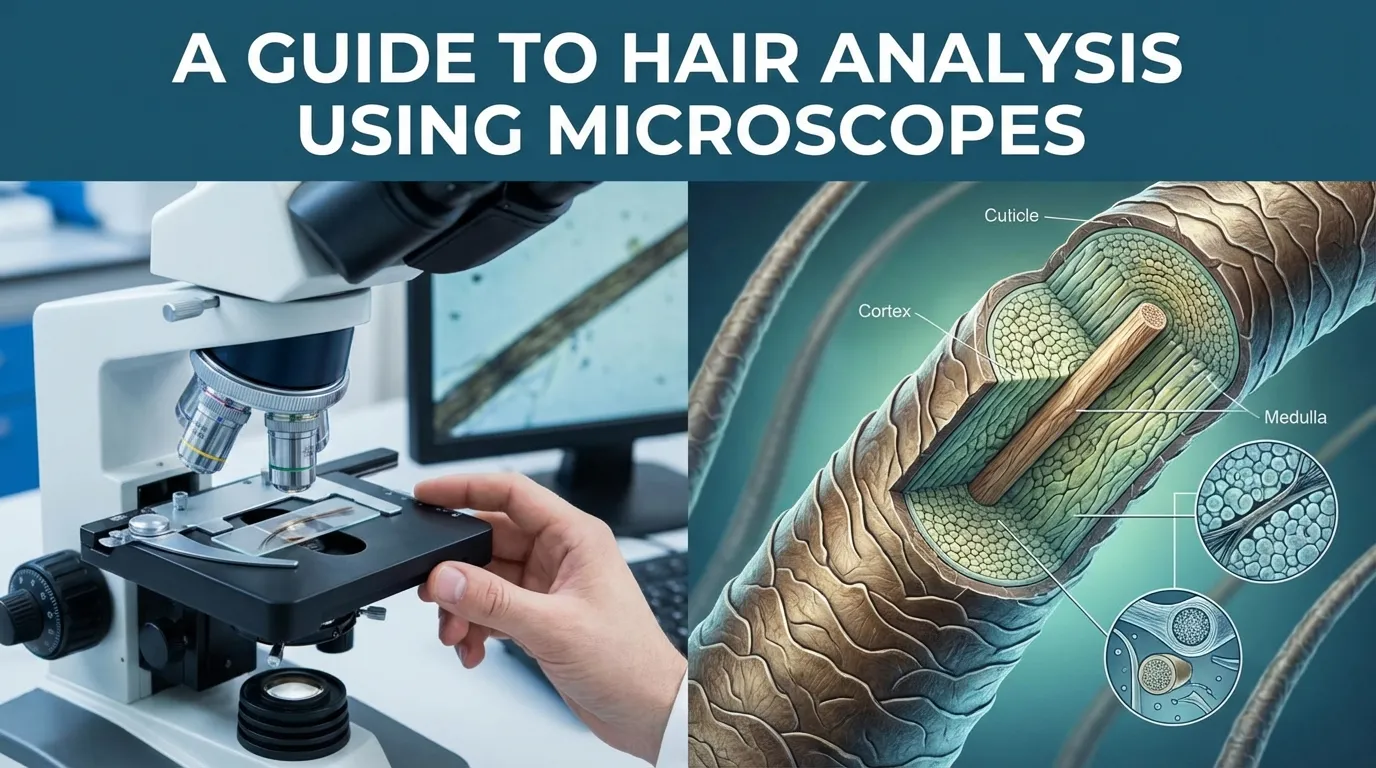
Hair analysis involves examining the hair shaft detail to gather information about an individual’s health, exposure to substances, and more. This process often utilizes a microscopic hair analysis system to inspect the hair’s structure and composition. The hair shaft, which consists of the cuticle, cortex, and medulla, provides a wealth of information. Each part of the hair shaft detail reveals different aspects of your health and environment.
Microscopic hair analysis allows you to see beyond the surface. You can observe the hair’s internal structures, such as the medulla, which can indicate various health conditions or exposure to toxins. This method is not only used in personal health assessments but also plays a crucial role in forensic science.
According to a study published in News-Medical, hair samples are vital in forensic analysis, helping identify suspects or victims by determining age, gender, and racial origin.
Applications of Hair Analysis
The applications of hair analysis are vast and varied. Here are some key areas where this technique proves invaluable:
-
Forensic Science: Hair analysis is a staple in forensic investigations. It helps law enforcement agencies identify individuals involved in criminal activities. By examining hair samples, forensic experts can gather clues about a person’s identity and movements.
-
Health Monitoring: Hair analysis can provide insights into your nutritional status and exposure to environmental toxins. Although it cannot predict health effects from substance concentration, it can indicate exposure levels. The Agency for Toxic Substances and Disease Registry (ATSDR) highlights the need for further research to establish standardized reference ranges and understand biological variations.
-
Drug Testing: Employers and law enforcement agencies use hair analysis to detect drug use. Hair retains traces of drugs longer than blood or urine, making it a reliable source for long-term drug testing.
-
Cosmetic Industry: The beauty industry uses hair analysis to develop personalized hair care products. By understanding the microscopic hair details, companies can create treatments tailored to individual hair types and conditions.
-
Research and Development: Scientists use hair analysis in research to study the effects of various substances on hair health. This research contributes to developing new products and treatments for hair care.
The ability to conduct high resolution hair inspection through hair analysis systems opens up a world of possibilities. If you’re into personal health, forensic science, or cosmetic development, hair analysis gives you useful data that can help you with your choices and actions.
As you explore the world of hair analysis, choosing the right microscope becomes essential. A microscope for hair analysis allows you to uncover intricate details that reveal much about hair health and history. Proper tools and techniques ensure accurate results, whether you’re a beginner or a seasoned professional.
Remember, the right equipment can transform your analysis from ordinary to extraordinary. We invite you to share your experiences and insights. Your feedback enriches our understanding and helps us provide better guidance for all hair analysis enthusiasts.